

Trump-class Battleships - The Golden Fleet's Hammer; Our In-Depth Analysis
December 23, 2025
by Thomas W. Pohl
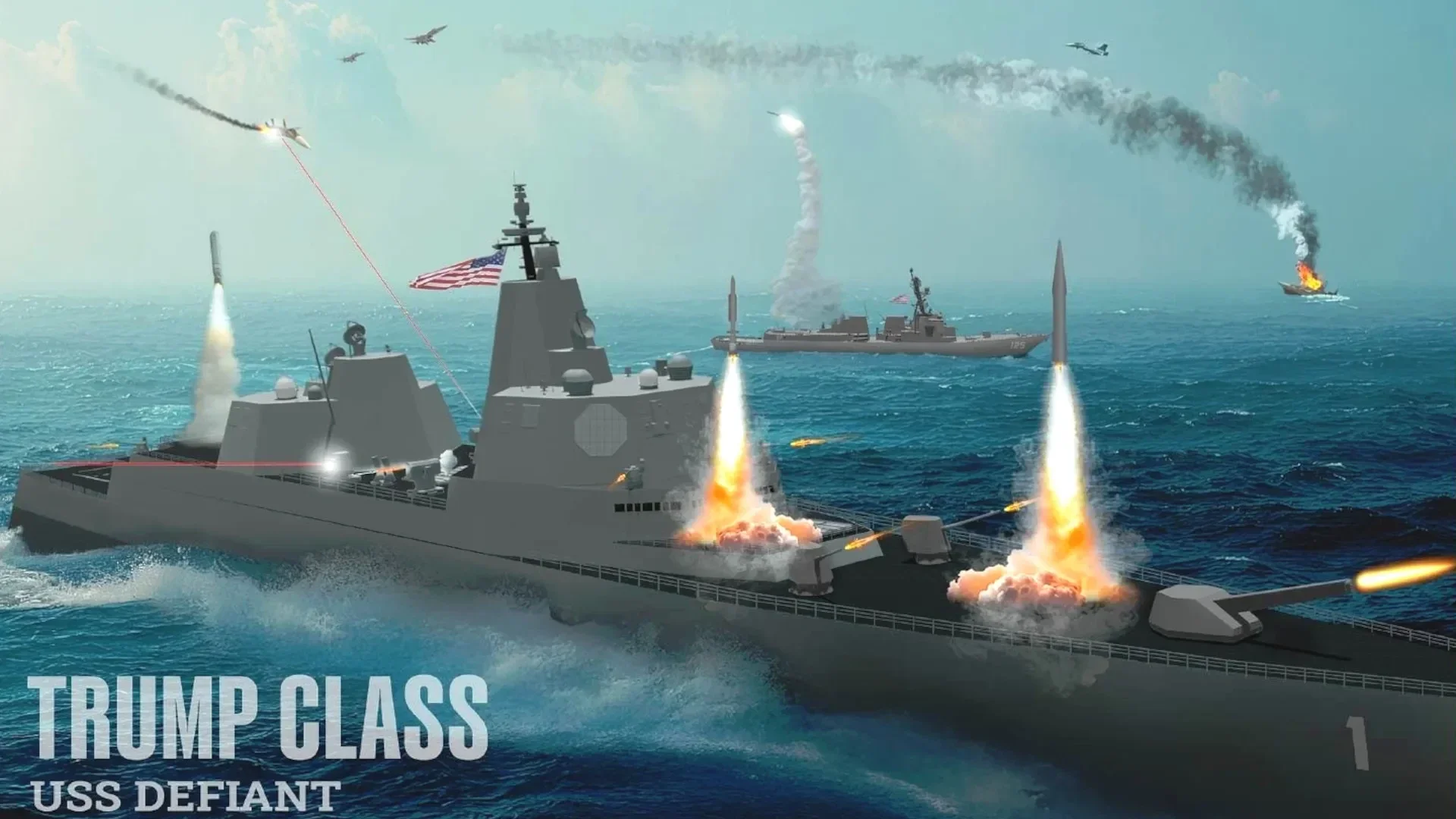
Official United States Navy rendering of the Trump-class Battleship USS Defiant (BBG-1) in action
"Today, President Donald J. Trump and Secretary of the Navy John C. Phelan, alongside Secretary of War Pete Hegseth, announced their intent to construct a new class of American-designed battleships that will be the most lethal surface combatant ever constructed. The future USS Defiant (BBG 1) will be the first Trump class battleship and will be an unambiguous statement of American commitment to maritime superiority with capability to distribute more firepower across the fleet than any other class of ship, for any Navy, in history." - (Excerpt from official press release)
Introduction
On December 22, 2025, U.S. President Donald J. Trump gave a press conference at the White House to announce the Trump-class battleship. The President was accompanied by Secretary of War Pete Hegseth, Secretary of the Navy John C. Phelan and Secretary of State Marco Rubio at the event. The Trump-class battleship will be a part of the U.S. Navy's Golden Fleet initiative and it has received the official program designation BBG(X). It was also announce that this new battleship will supplant the DDG(X), a next generation missile destroyer that was the planned successor to the venerable Arleigh Burke-class missile destroyers currently serving in the U.S. Navy fleet, and will utilize the technology already developed in that program.

U.S. President Donald J. Trump Announcing the Trump-class Battleship at a Press Conference at Mar-A-Lago on December 22, 2025
Ship Details
The Trump-class battleships are envisioned to be 35,000-40,000 ton displacement steel hulled vessels with an armor belt of 6 inches of steel, as President Trump stated in an earlier speech in September. Theses new battleships will be the largest, non-aircraft carrier, surface combatants built in the United States since the Iowa-class battleships in the 1940's. The initial batch will consist of two ships, with the first ship designated USS Defiant (BBG-1) according to the artwork that was displayed at the press conference. It must be noted that this is not a normal naval naming convention. Class names are usually named after the lead ship of the class. I believe that the class being named after Trump was because the idea of resurrecting battleships was his idea. Of course, Trump's political detractors will inevitably mock the class name as just another ego trip by the President. In fact, memes mocking this ship have already appeared on social media just one day after this announcement.
After the initial batch of two ships, there are plans to expand the class to an initial batch of ten hulls and, according to Trump, hopefully 20-25 hulls eventually. These ships are the centerpiece of a larger naval shipbuilding initiative called the Golden Fleet. President Trump has waxed poetically about Teddy Roosevelt's "Great White Fleet" recently and I believe that the "Golden Fleet" is intended to be the modern equivalent of it.
It is estimated that the cost of these new battleships will be between $10-15 Billion each. While President Trump said that work will begin 'almost immediately" on the new battleships and be completed in 2-3 years, it is not the actual construction of the ships that will take 2-3 years but the design process for them. Actual construction of these ships are expected to begin in the early 2030's. President Trump stated that America's top two naval shipbuilders, Huntington Ingalls Industries (HII) and General Dynamics - Bath Iron Works (BIW), would be involved in the process along with the famous Gibbs & Cox naval engineering company. Both companies have expressed support for whatever the U.S. Navy decides to do.
While these new battleships do not possess the big guns of traditional 20th-century battleships, such as the famous Iowa-class battleships that were built in the 1940's, they do seek to fulfill the long reaching, offensive firepower role that traditional battleships were employed in.

All four Iowa-class battleships cruising together
Armament
According to the artwork and an officially released specification sheet released by Naval Sea Systems Command (NAVSEA), The Trump-class battleships will be armed with the following:
- 1 x 32 Megajoule Railgun with High Velocity Projectiles (HVP)
- 2 x Mk. 45 5-inch/62-caliber Turrets
- 4 x Mk. 38 30mm Gun Mounts
- 12 x VLS cells for Intermediate-Range Conventional Prompt Strike (CPS) Hypersonic Missiles
- 128 x Mk. 41 VLS cells
- 2 x Mk. 31 Launchers (21 cells each) for the RIM-116 Rolling Airframe Missile (RAM)
- 2 x 300 Megawatt or 600 Megawatt Lasers
- 2 x Counter-UxS Systems
- The ship will also be armed with the still in development nuclear-armed Sea Launched Cruise Missile, Nuclear (SLCM-N)
Electronic Systems
In addition to its impressive armament, the Trump-class battleships will have an impressive electronic warfare suite which includes:
- AN/SPY-6 Aegis Radar System which is an active electronically scanned array (AESA) 3D radar system with 4 arrays
- 4 x AN/SLQ-32(V)7Surface Electronic Warfare Improvement Program (SEWIP) Block 3 mounts. SEWIP protects surface ships from anti-ship missiles, providing early detection, signal analysis and threat warning
- 4 x Optical Dazzling Interdictor (ODIN) mounts. ODIN is a laser weapon system that allows a ship to counter optical sensors found on some missiles and most unmanned aerial systems (UAS)
- Embarked Commander with full C4I suite
Other Ship Features
- Combination Gas Turbine & Diesel powered engines providing 30+ knots of speed
- Flight Deck and Twin Hangers at the aft end of the ship. Theses ships will be capable of embarking the Sikorsky SH-60R Seahawk anti-submarine helicopter, the V-22 Osprey tilt-rotor aircraft, and eventually the Future Vertical Lift (FVL) aircraft. Whether the twin hanger can only accommodate the SH-60R only or has the size to accommodate the larger aircraft remains to be seen.

Official Ship Features graphic of the Trump-class battleship released by NAVSEA
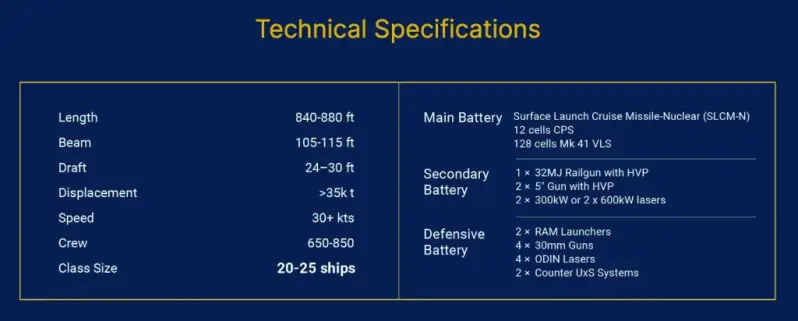
Official Technical Specifications graphic of the Trump-class battleship released by NAVSEA
Why Build New Battleships?
At the press conference Secretary of the Navy John C. Phelan stated, “The President has been clear – we must bring back our American maritime industrial might, and he has told me many times that as Secretary of the Navy it is my job to equip our sailors to win the fight at sea with the finest ships in our history. Now when a conflict arises, you’re going to ask us two questions: where is the carrier, and where is the battleship.”
These new battleships will stand as the centerpiece of the U.S. Navy’s Golden Fleet initiative and will be the first of its kind providing dominant firepower and a decisive advantage over adversaries by integrating the most advanced deep-strike weapons of today with the revolutionary systems of the years ahead.

Official U.S. Navy rendering of the Trump-class Battleship

Official U.S. Navy rendering of the Trump-class Battleship
“As we forge the future of our Navy’s Fleet, we need a larger surface combatant and the Trump-class Battleships meet that requirement. We will ensure continuous improvement, intellectually honest assessments about the requirement to effectively deter and win in the 2030s and beyond, and disciplined execution resulting in a Fleet unparalleled in lethality, adaptability and strength.” - Admiral Daryl Caudle, 34th Chief of Naval Operations
Changing Times, Changing Needs
The idea of building larger modern surface combatants is not new. Various ideas, proposals and programs were floated and ultimately discard in during the 1990's and 2000's based on changing world events, changing military priorities and declining budgets. Some of the previous ideas included the Metcalf-class, the brainchild of Vice-Admiral Joseph Metcalf III in the late-1980's, the Arsenal Ship concept in the late 1990's, and the CG(X) (formerly CGN-21) missile cruiser program which was cancelled by President Obama in 2008. The goal of these three programs was to greatly increase the number of missile tubes in the hull for increased firepower. The U.S. Navy even tried to get more missile tubes at seas by converting four Ohio-class SSBN's into SSGN's carrying 154 Tomahawk cruise missiles. In 2013, Huntington Ingalls Industries (HHI) revived the idea when it proposed a Flight II version of the LPD-17 hull with a variant carrying up to 288 VLS cells for the ballistic missile defense and precision strike missions.

Metcalf-class Missile Cruiser
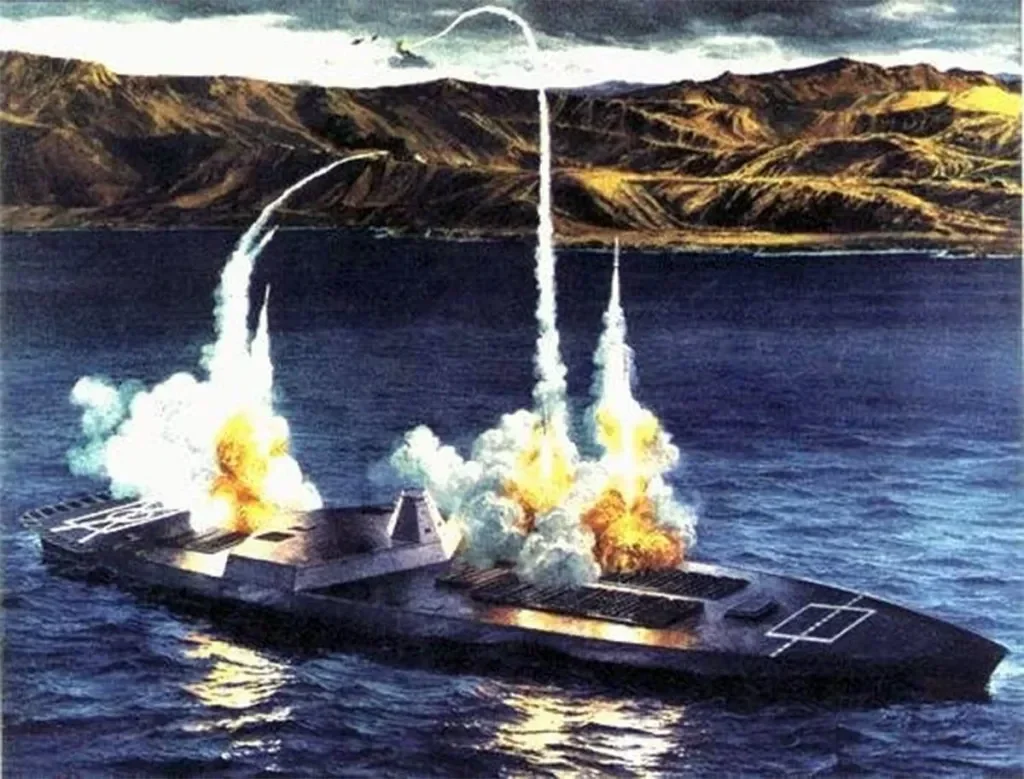
Arsenal Ship Concept
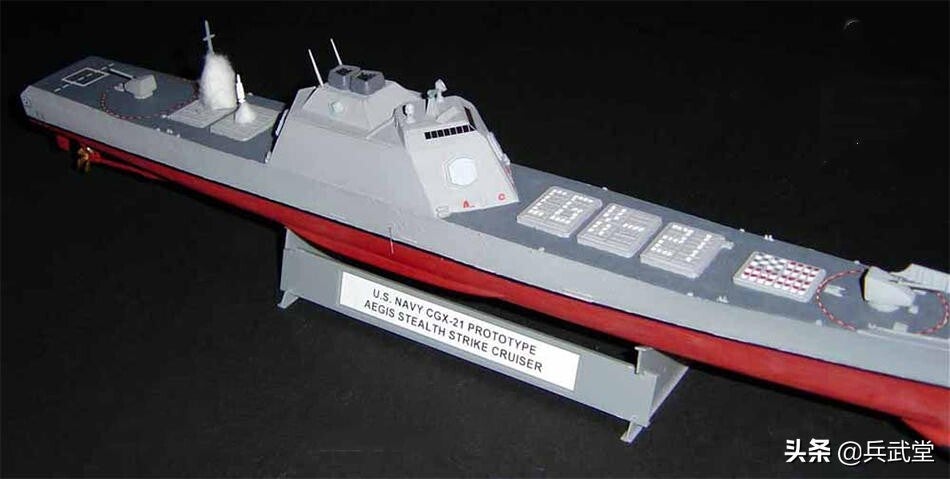
CGX-21 Missile Cruiser Concept

CG(X) Missile Cruiser Concept

Ohio-class SSGN
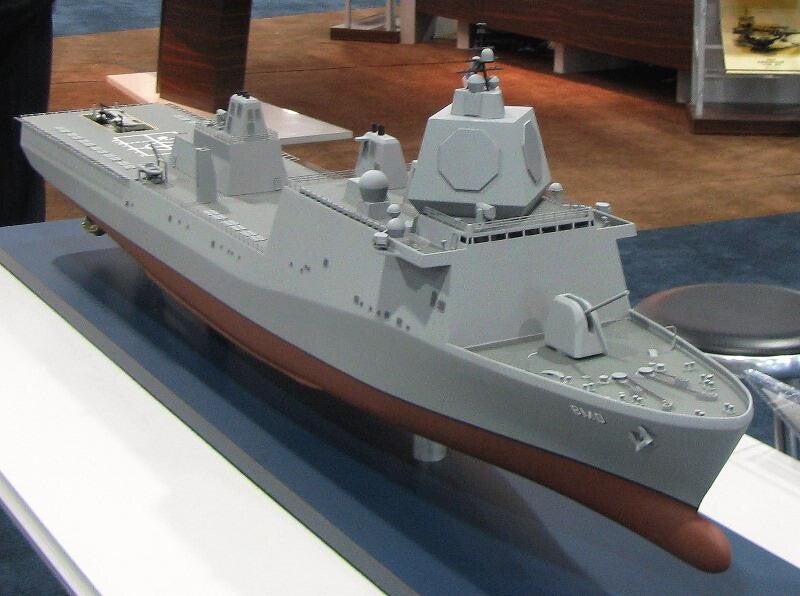
LPD-17 Flight II BMD Proposal by HII
With global events necessitating larger investments in ground combat operations during the War on Terror in the 2000's and 2010's, These aforementioned concepts ultimately became victims of the changing times and declining naval budgets. During this period, the U.S. Navy shifted to building smaller, more cost effective surface combatants to aid in the War on Terror. A prime example of these are the Freedom-class and Independence-class Littoral Combat Ships (LCS). Both of these classes would ultimately prove to be failures due to design and engineering flaws, failure of the Multi-Mission Modules that was a core element of their design and lack of firepower with the rise of China as a near peer threat in the 2020's. This last one is a good example of changing times and changing needs.

Freedom-class Littoral Combat Ship (LCS)
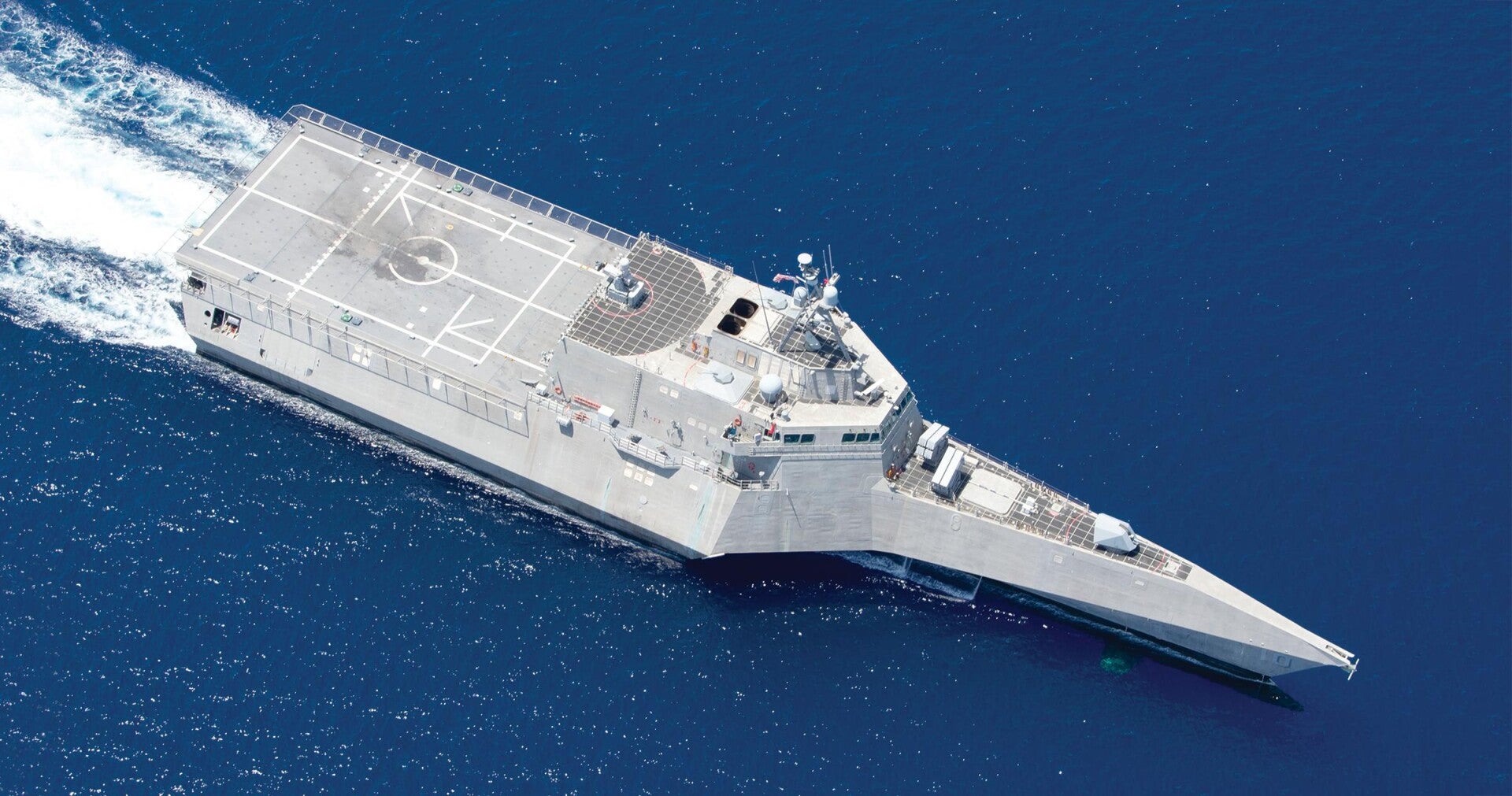
Independence-class Littoral Combat Ship (LCS)
Another recent change that has influenced the U.S. Navy's drive towards larger surface combatant ship with more missile tubes is the Gaza War where the Hamas terrorist organization that was located in the Gaza Strip, which was supported by Iran and the Iranian-backed Houthis militant group that is based in Yemen, launched hundreds of missile and drone attacks on Israel. Nations allied to Israel helped to defend Israel by shooting down these missiles and drones. Naval ships would often exhaust their supply of expensive missiles in this operation and have to deploy back to nearby friendly bases to reload their vertical launch tubes. These missile tubes were not designed to be reloaded at sea. However, in the the light of this operation, the U.S. Navy has begun to test the reloading of vertical launch tubes at sea.
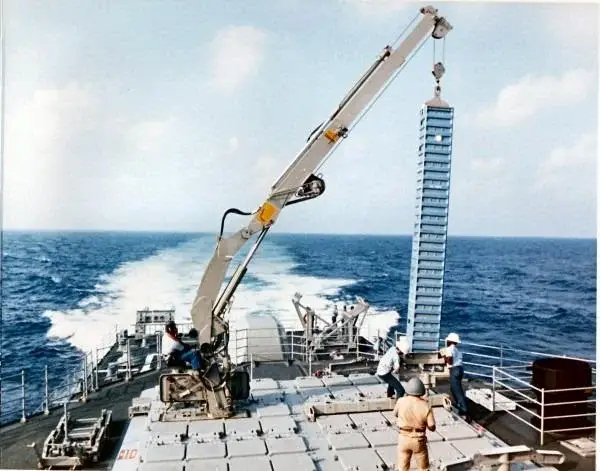
USS Chosin (CG-65) reloading a Vertical Launch Tube at Sea
This last example put forth the urgent need to get more missile tubes to sea. The necessity is even greater considering the that the last seven Ticonderoga-class missile cruisers, armed with 122 Mk. 41 VLS cells each, are slated to be retired by 2029 and the four Ohio-class SSGN's, armed with 154 VLS cells each, are slated to be retired by 2028.
Operational Usage
According to the U.S. Navy, "The Battleship will be capable of operating independently, as part of a Carrier Strike Group, or commanding its own Surface Action Group depending on the mission and threat environment. With the ability to provide forward command and control for both manned and unmanned platforms, Battleship will be a critical component in executing the Navy Warfighting Concept."
Surface Action Groups (SAG) centered around battleships are not a new concept for the U.S. Navy. The U.S. Navy employed them last in the 1980's when the SAG's were centered around the four World War Two-era Iowa-class battleships that had been newly modernized (with Harpoon anti-ship missiles, Tomahawk cruise missiles and Phalanx CIWS) and recommissioned during that decade.

USS Iowa (BB-61) after undergoing her refit and modernization during the 1980's. Missile launchers for Harpoons and Tomahawks are visible amidship
The concept of the Surface Action Group also gives the U.S. Navy something it has been lacking for decades, offensive firepower. In modern times, the U,S. Navy's primary source of offensive firepower has been its aircraft carriers. Most of its surface combatants were designed primarily for anti-air and anti-ballistic missile defense, as well as anti-submarine warfare (ASW) all in defense of the carrier. As a whole, the U.S. Navy has lacked offensive firepower out side of its carriers and the new Trump-class battleships seek to fill that missing role it lost when it finally retired the Iowa-class battleships for good in the 1990's.
Arsenal Ship Reborn or Something Better?
In the 1990's, the U.S. Navy brought forth a concept for a large surface combatant jam packed with as many missile tubes as they could cram into one hull, the Arsenal Ship. While the idea was to increase the number of missile tubes at sea and add an exponential increase in offensive firepower in support of land-based operations, these ship pretty much lacked any weapons beyond their VLS launchers. Basically they would sit offshore, mostly invulnerable to shore-based threats from most third world countries that the U.S. military was engaged in at the time, and just lob hundreds of missiles at far away land-based targets in support of U.S. Army and USMC operations on land. Most concepts were basically large floating barges packed with hundreds of missile tubes. Their detractors pointed out their vulnerability. They would be big easy targets with little defensive weapons and a lot of capability would be lost if they were sunk. They would also decry "putting all your eggs into one basket". The critics also pointed out not only the cost of building the ships, but the cost of buying all those missiles to arm it with. Ultimately, the Arsenal Ship concept was abandoned mostly because of declining defense budgets after the end of the Cold War, harkening back to the "changing times, changing needs" mantra I discussed earlier in this article.
Arsenal Ship Concept
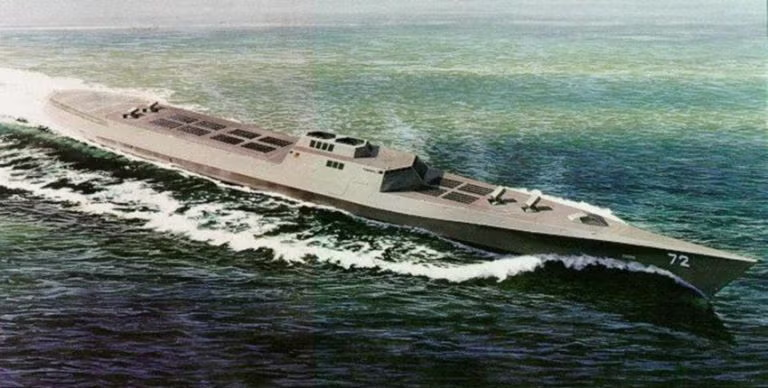
Arsenal Ship Concept
Unlike the Arsenal Ship concept, the Trump-class battleships have a more balanced array of offensive and defensive weapons and electronics. This makes these new battleships more capable of defending themselves than the Arsenal Ships would have been. In addition, the Trump-class battleships are also designed to operate and control an undisclosed number of Unmanned Surface Vessels (USV's). These USV's would operate in the Manned-Unmanned Teaming (MUM-T) role, better known as the "loyal wingman" role, which is a force multiplier role that is becoming more common in air forces around the world in recent years.
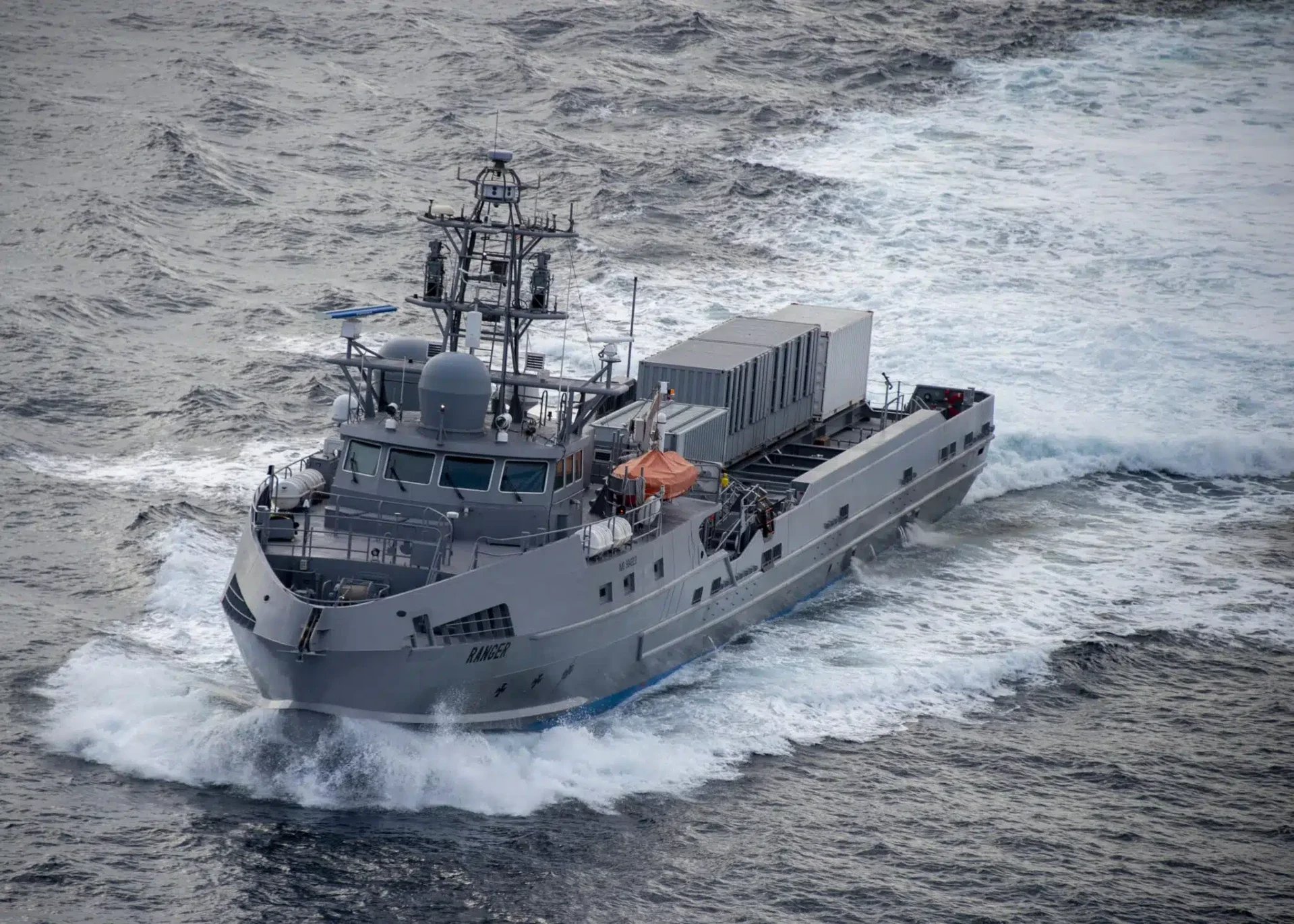
The Large Unmanned Surface Vessel Ranger transits the Pacific Ocean to participate in Exercise Rim of the Pacific (RIMPAC) 2022
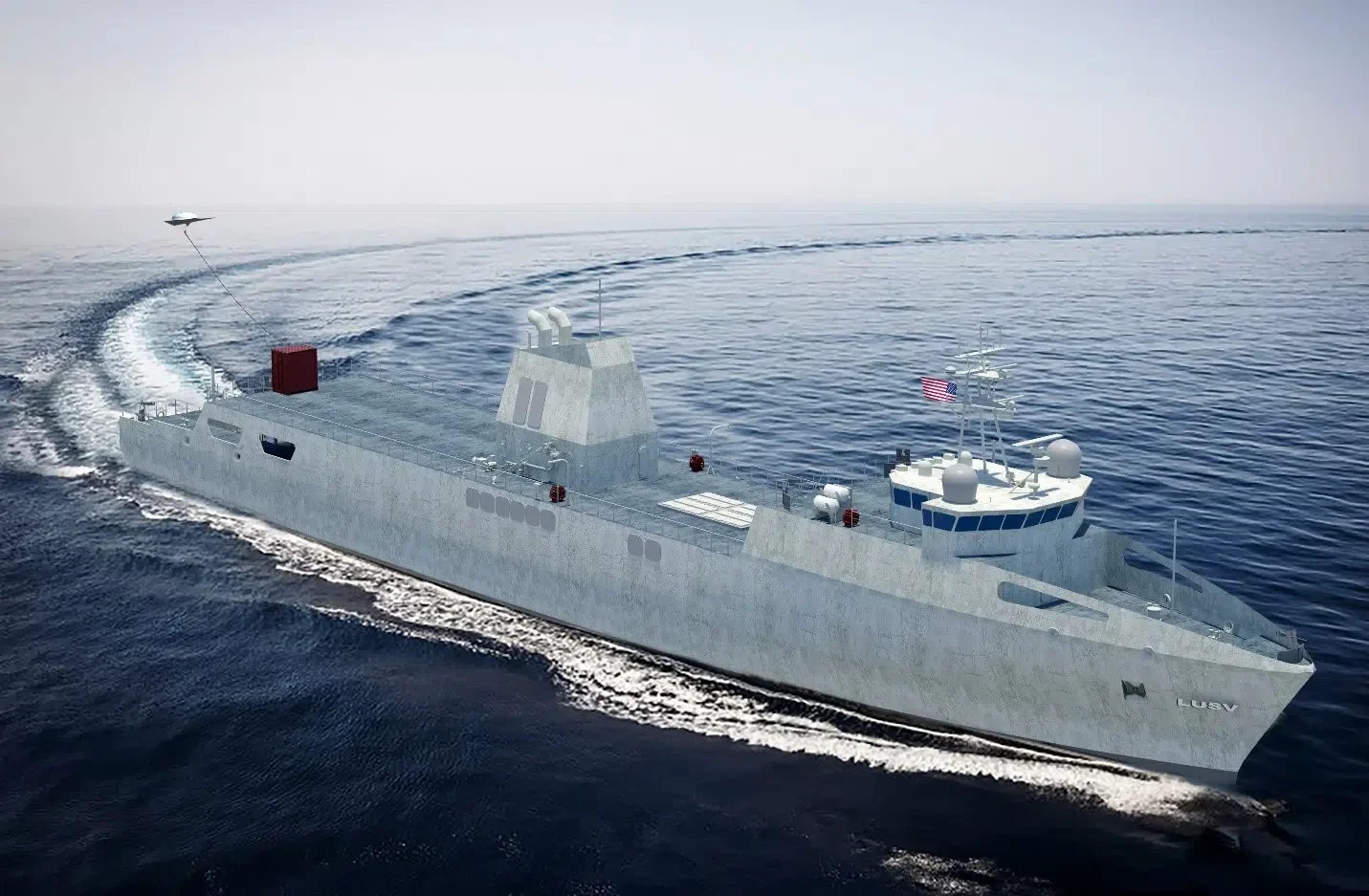
Austal concept of Large Unmanned Surface Vessel (LUSV) showing an optionally-manned bridge, VLS cells and engine funnels amidships. Note that there is plenty of free deck space with a tethered UAS aft of the ship

Sea Hunter Unmanned Surface Vessel