

Bell MV-75 FLRAA Gets New Nickname "Cheyenne II"
April 25, 2026
by Thomas W. Pohl
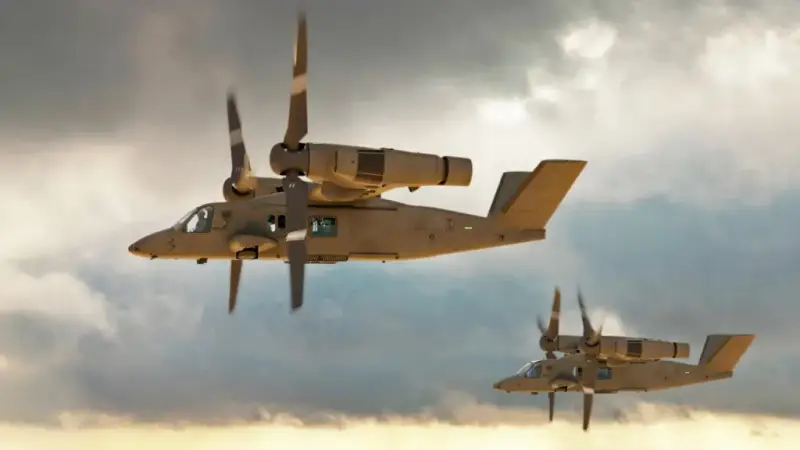
Bell MV-75 Cheyenne II (FLRAA)
The U.S. Army recently selected Cheyenne as the common name for the Bell MV-75 Future Long-Range Assault Aircraft (FLRAA) honoring the Native American Cheyenne Tribes. This decision continues a 70-year Army tradition that began with the H-13 Sioux. The selection of a tribe for the name of an aircraft is a deeply significant act that honors their heritage and reflects their attributes. Here’s what you should know about the MV-75, the Cheyenne Tribes, and what the name symbolizes.
The MV‑75 was named for the Cheyenne Tribes in recognition of key qualities they exemplify: adaptability, speed on the battlefield, and a warrior’s ethos.
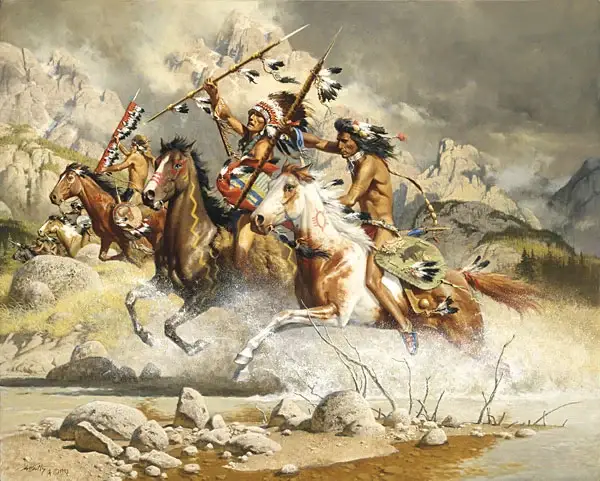
Cheyenne Warriors depicted in original artwork entitled "Cheyenne" by Frank McCarthy
The Bell MV-75 Cheyenne II was developed from the Bell V-280 Valor, which beat out the rival Boeing/Sikorsky Defiant X ( which was based on their earlier Sikorsky/ Boeing SB-1 Defiant) to win the U.S. Army's Future Long-Range Assault Aircraft program in 2022.
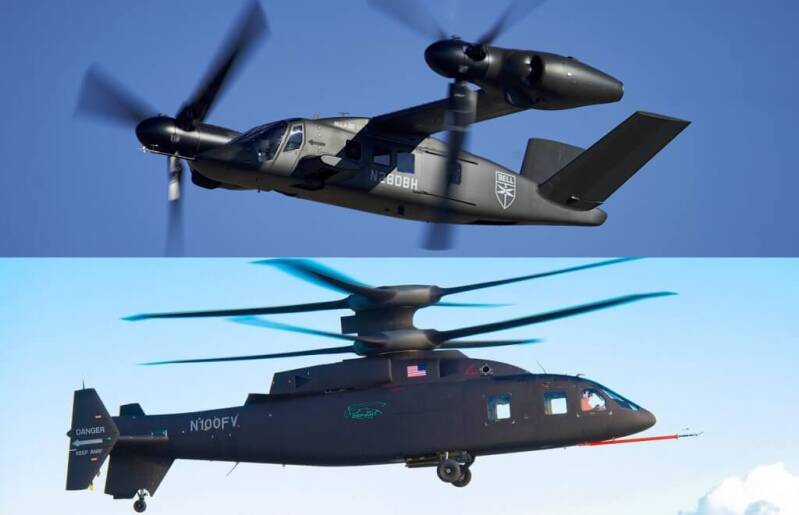
Future Long Range Assault Aircraft (FLRAA) competitors, Bell V-280 Valor (top) and Sikorsky/Boeing Defiant X (bottom)
The Namesake - Lockheed AH-56 Cheyenne
The Cheyenne II is the second use of the "Cheyenne" name for a U.S. Army aircraft. The first use of the name was the Lockheed AH-56 Cheyenne. The AH-56 Cheyenne was the winner of the U.S. Army's Advanced Aerial Fire Support System (AAFSS) program in 1966. This attack innovative helicopter utilized a novel for the time pusher prop located in its tail to increase the aircraft's top speed to over 230mph/200 knots, well beyond that of conventional rotorcraft. However, technical problems, program delays and the crash of the third prototype prompted the cancellation of the program in 1969.
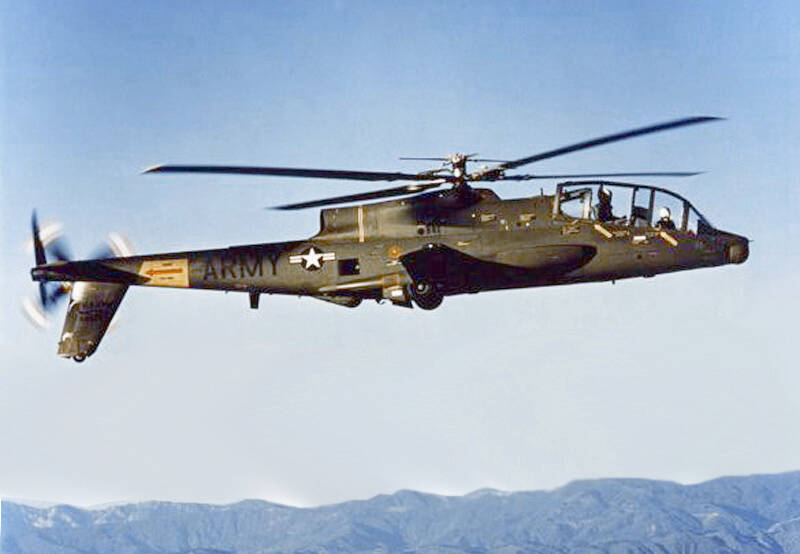
Lockheed AH-56 Cheyenne
Adapting To Any Environment
For centuries, the Cheyenne lived throughout the Great Plains, navigating harsh conditions, conflict with rival tribes, and pressures created by westward expansion. The Cheyenne’s resilience required repeated relocation and significant cultural shifts, including becoming proficient hunters and gatherers, adopting a nomadic lifestyle, and mastering horsemanship. These adaptations enabled the tribe to endure and thrive despite constant change.
Just as the Cheyenne had to adapt, the MV-75 Cheyenne II is designed to adapt. With its Modular Open Systems Approach (MOSA), the Cheyenne is rapidly upgradable, enabling the Army to quickly integrate new technology that meets the needs of dynamic modern battlefields.
As the Army faces new battlefield environments, the MV‑75 provides the capability needed to operate effectively. Its enhanced speed and extended operational reach, reduce exposure in contested airspace, and increase endurance in dispersed, complex theaters.
The Army is operating in a new environment that is unlike the battlefields of the past. The environment is characterized by greater distances and integrated, technologically advanced threats. The MV-75 provides the capability needed to operate in this advanced environment. The MV-75’s speed and range transforms battlefield geometry by expanding operational reach for ground forces, limiting exposure in contested airspace and providing the endurance to operate in larger, more dispersed and complex theaters.

Trio of Bell MV-75 Cheyenne II's (artwork courtesy of Bell Textron)
Going Faster and Farther
Mobility and speed were central to the Cheyenne Tribes, whose nomadic lifestyle demanded the ability to rapidly dismantle, relocate, and rebuild their communities. This agility is mirrored in the MV‑75 Cheyenne II.
The MV-75 Cheyenne II provides the U.S. Army with an unmatched capability by flying twice as fast and twice as far as the current fleet - improving survivability and operational flexibility. For medical evacuation missions, the MV-75’s speed supports rapid movement of wounded Soldiers to critical care well within the golden hour and its ability to self‑deploy and take off vertically from nearly any location further expands its utility across diverse missions.
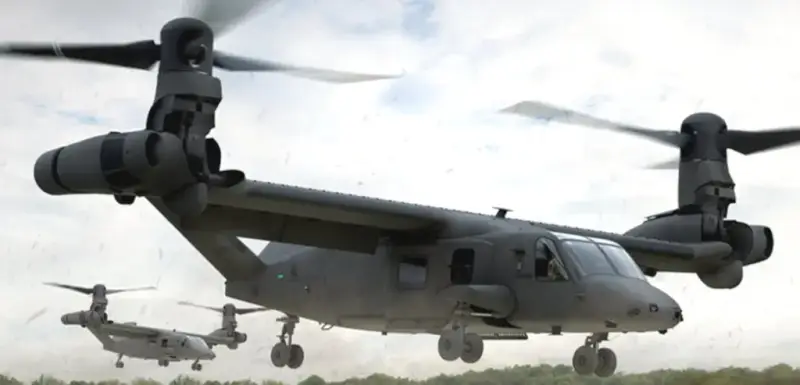
Bell MV-75 Cheyenne II's (artwork courtesy of Bell Textron)
Protecting and Defending
The Cheyenne Tribes developed strong warrior traditions to defend their people from external threats. Among their seven military societies, the Dog Soldiers were regarded as elite—known for exceptional bravery, discipline, and leadership. They served as both protectors within the village and key leaders in battle, demonstrating unwavering resolve.
The MV‑75 Cheyenne II will support the Army’s most capable air assault formations—units whose mission and warrior ethos align with those of the Dog Soldiers. The 101st Airborne Division will be the first to field the MV-75 Cheyenne II. A specialized MV-75 will also equip U.S. Special Operations Command (SOCOM), enabling missions requiring advanced reach, speed, and precision.
With its speed, range, MOSA architecture, and enhanced lethality, the Cheyenne provides the Army with a next‑generation capability designed to maintain overmatch. It is built to operate in larger, more complex, and more widely dispersed battlespaces, reshaping the way Army Aviation supports the fight.
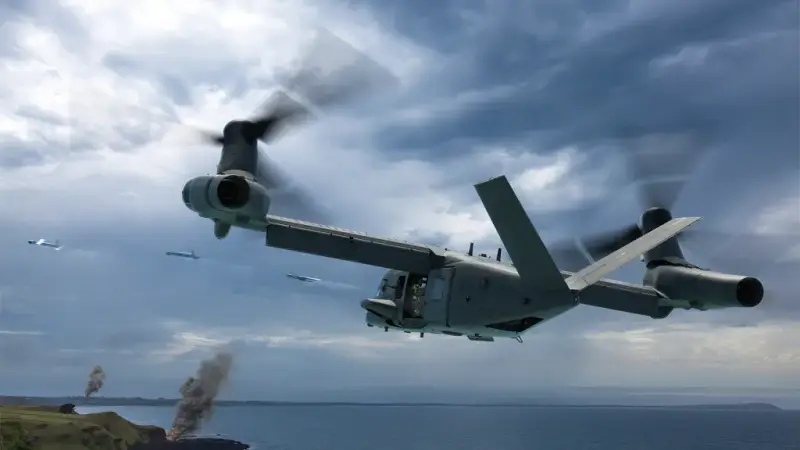
Bell MV-75 Cheyenne II's (artwork courtesy of Bell Textron)
Introducing the MV-75 Cheyenne II to the Battlefield
The MV-75 embodies the adaptability, resilience, and warrior ethos of the Cheyenne Tribes. By bringing these attributes into the modern battlespace, the MV‑75 Cheyenne represents both a significant advancement in capability and a meaningful tribute to the heritage that inspired its name.
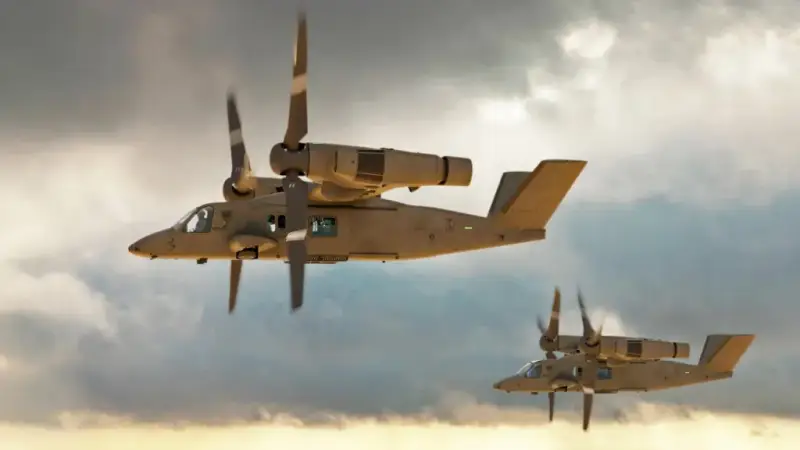
Bell MV-75 Cheyenne II's (artwork courtesy of Bell Textron)