

Trump-Class Updates: Nuclear-Powered; 15 Ships Starting FY28; Shipbuilding Plan
May 23, 2026
by Thomas W. Pohl
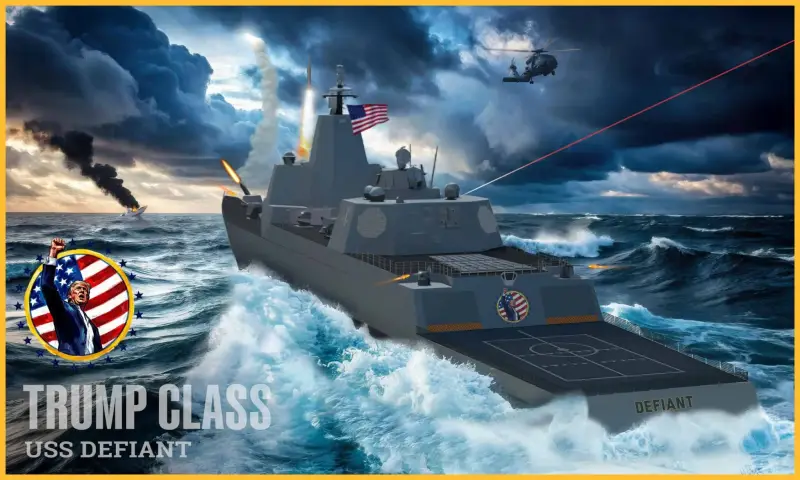
Official Artwork of the Trump-class battleship USS Defiant (BBGN-1)
Chief of Naval Operations Admiral Daryl Caudle, as well as Acting Secretary of the Navy Hung Cao and Commandant of the Marine Corps Gen. Eric Smith, testified before members of the House Armed Services Committee on May 14th. The focus of the hearing was on the Department of the Navy’s 2027 Fiscal Year budget request. The Navy disclosed that it had decided the Trump class warships will feature nuclear propulsion in its latest long-term shipbuilding plan.
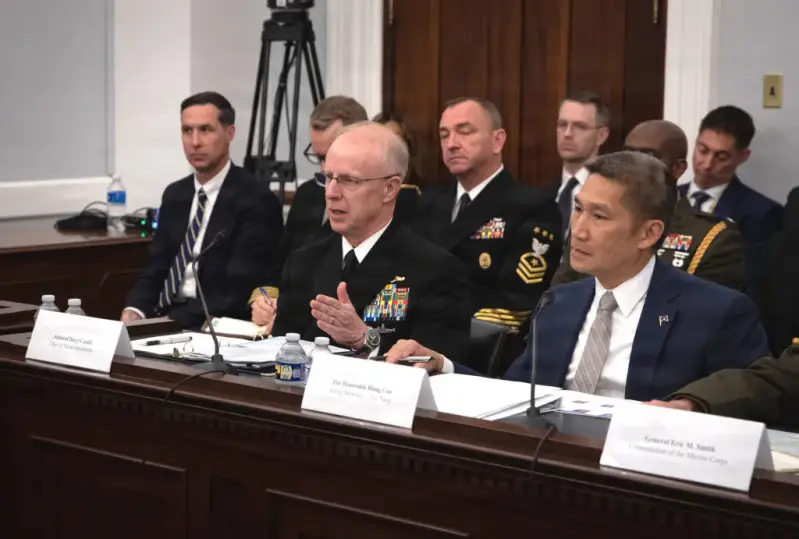
Chief of Naval Operations Admiral Daryl Caudle, speaks at a budget-related hearing before members of the House Appropriations Committee on May 12, 2026.
The U.S. Navy’s near-total abandonment of surface combatants with nuclear propulsion after the end of the Cold War is “one of the largest mistakes” it’s ever made, according to Admiral Caudle. He also explicitly highlighted challenges the Navy has faced when it comes to fueling conventionally-powered ships taking part in operations against Iran.
“I know there have been many conversations and questions over the past few days regarding the news that the Trump class battleship will be nuclear powered. And, as you know, Virginia has a long history of nuclear shipbuilding. What specific design plans can you share at this point and can [you] speak to how nuclear power would enable this system to be successful?” Rep. John McGuire, a Virginia Republican and former U.S. Navy SEAL, asked Adm. Caudle directly.
“Sir, we walked away from surface nuclear power decades ago, and that was one of the largest mistakes the Navy ever did, and we’re bringing it back,” the Chief of Naval Operations said in response. “We need nuclear-powered surface ships to sustain combat operations with our nuclear-powered aircraft carriers.”
Though a major operator of nuclear-powered submarines, the Navy’s aircraft carriers are currently its only nuclear-powered surface ships. The service previously had a mixture of nuclear-powered surface combatants. This included three one-of-a-kind ships, the cruiser USS Long Beach (CGN-9), the frigate USS Truxtun (DLGN-25) (later recategorized as a cruiser and redesignated CGN-25), and the frigate USS Bainbridge (DLGN-25) (later recategorized as a cruiser and redesignated CGN-25). There were also two California class and four Virginia class cruisers, the latter not to be confused with the subsequent Virginia class of attack submarines. All of these ships entered service in the 1960s and 1970s. Expensive and complex to operate compared to similar conventionally-powered ships, they were all retired in the 1990s as part of post-Cold War drawdowns across the U.S. military.
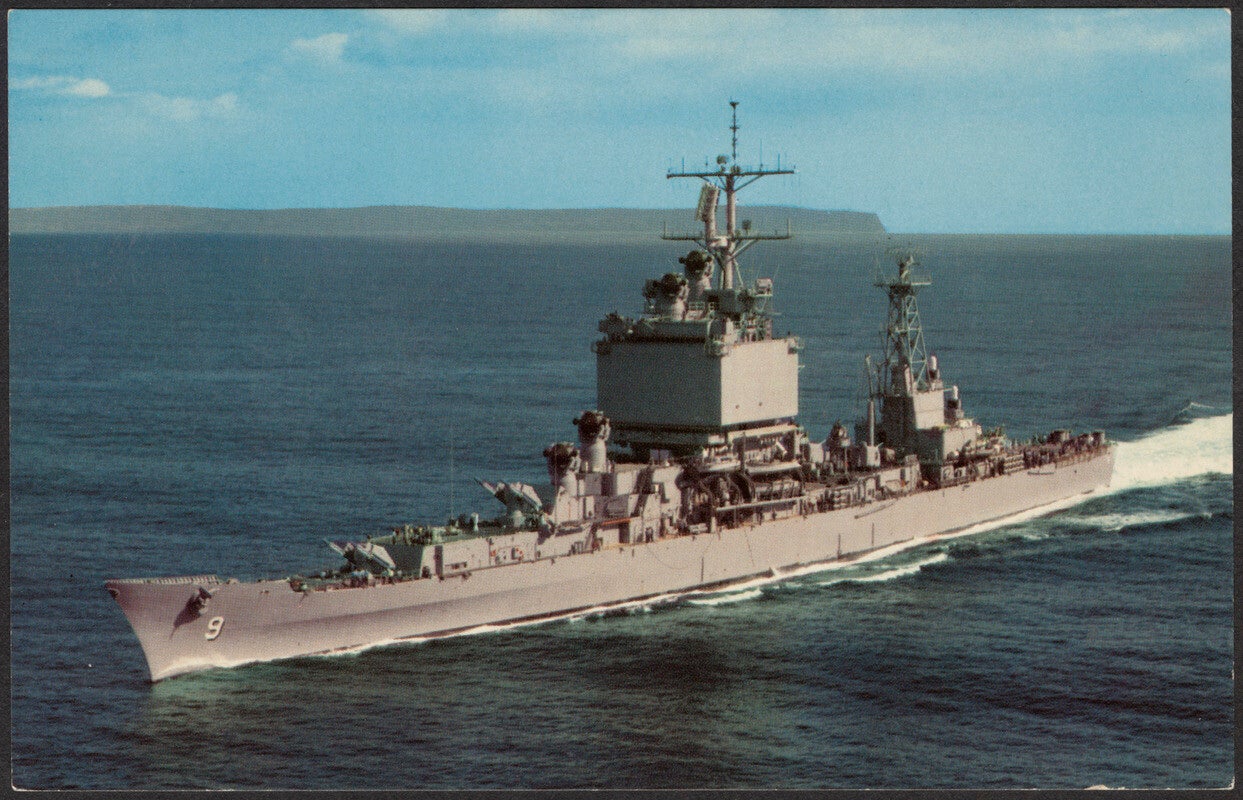
USS Long Beach (CGN-9)
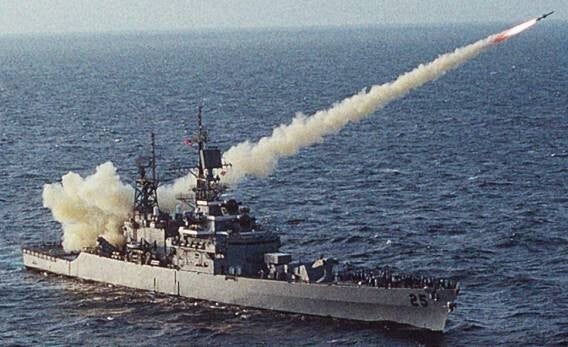
USS Bainbridge (DLGN-25/CGN-25)
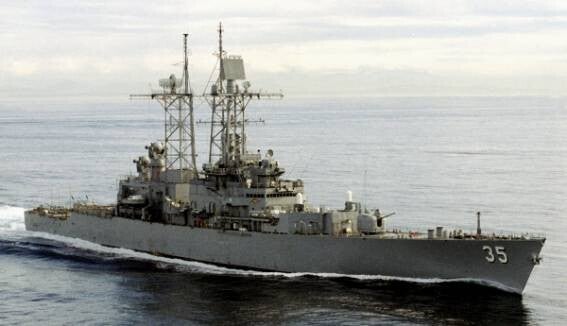
USS Truxton (DLGN-35/CGN-35)
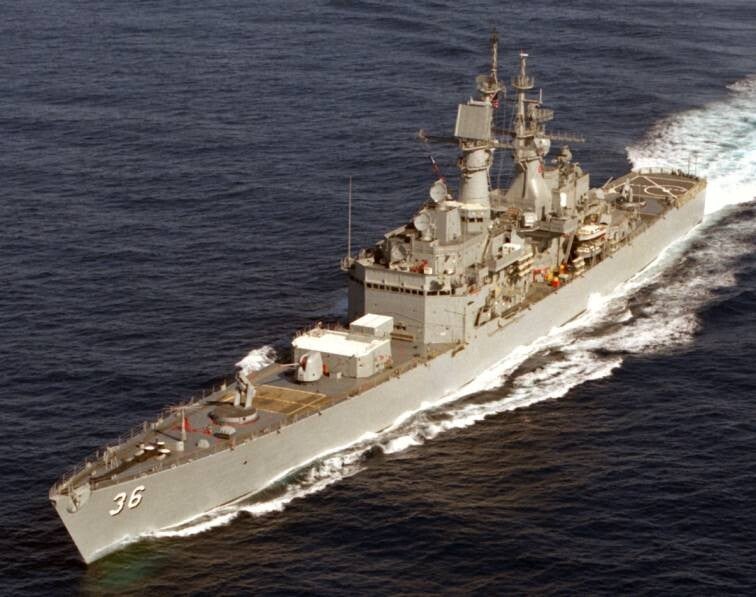
USS California (CGN-36)
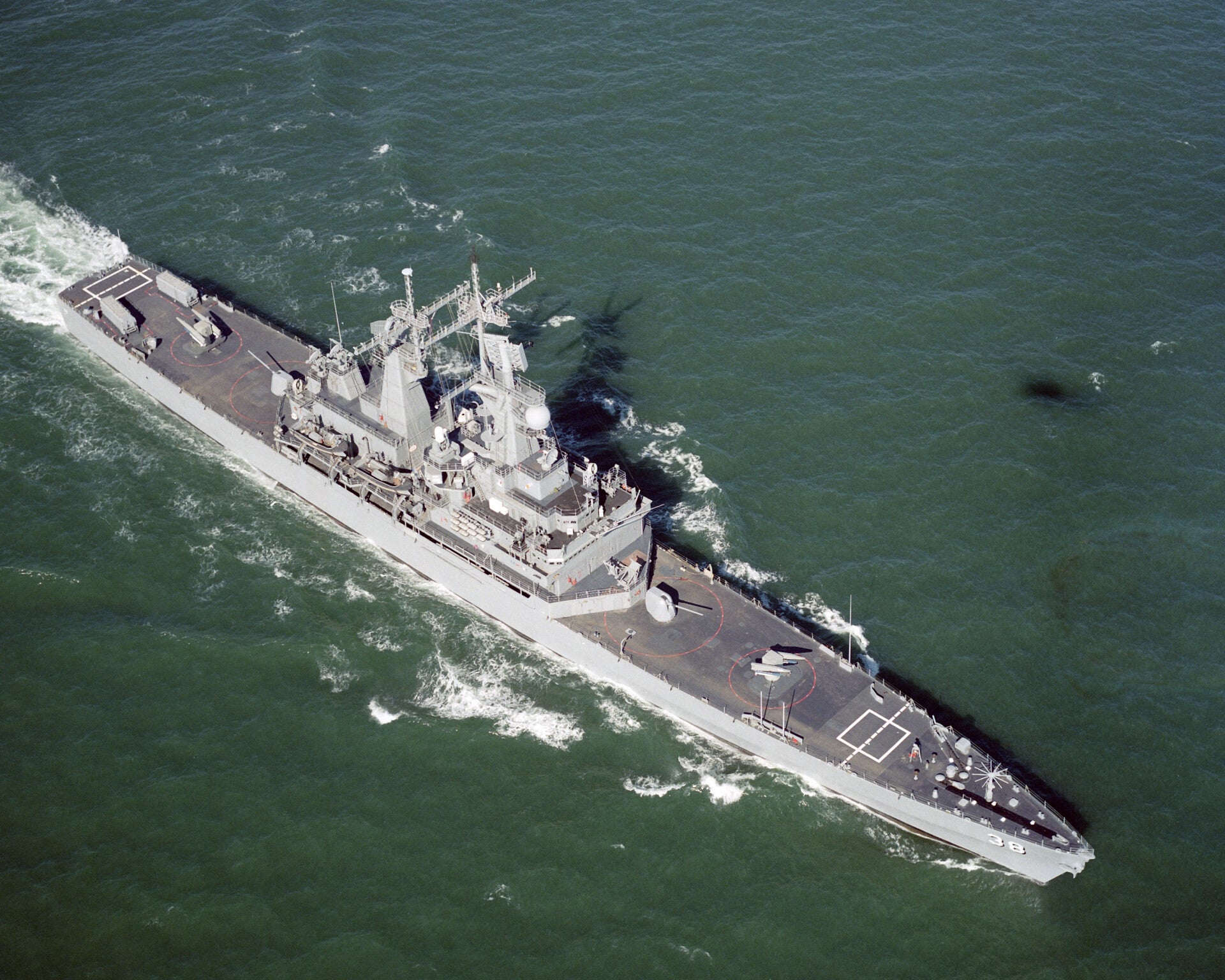
USS Virginia (CGN-38)
As Caudle highlighted, the central benefit of nuclear propulsion is functionally unlimited range since naval reactors can operate for decades without needing to be refueled. In the context of modern ships packed with ever-more advanced weapons and other systems, it can also offer an important boost in onboard power generation. This author has contended from the announcement of the Trump-class that it would need to be nuclear-powered to be able to generate the required power necessary to power all of the advanced weapon systems alone, especially the 32mj railgun. I am glad to see that I was correct in my assessment.
The Budget Plan
The U.S. Navy has now outlined plans to acquire 15 Trump class BBGNs, one virtually every other year, between Fiscal Year 2028 and 2055. Two are also set to be ordered back-to-back in Fiscal Years 2030 and 2031. An initial official estimate has put the price tag of each of these ships at $17 billion. This is more than what the service expects to spend on each of the next three Ford class aircraft carriers, the projected unit costs of which range from roughly $13 to $15 billion. Oddly, the program is still referred to as BBG(X) in the budget documents, but I expect that to be changed in the future.
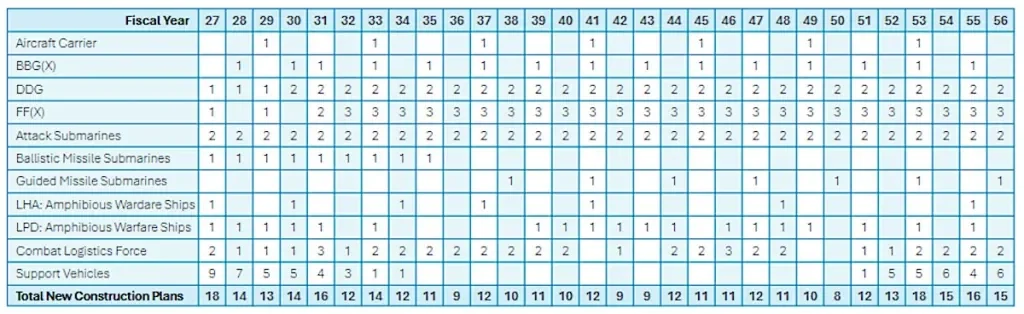
Trump-class construction timeline (2nd row) in the U.S. Navy's long-term budget plan
The Construction Plan
“We intend to, with all we can do, use pull-through technologies, [including] things from that we’ve worked on with DDG(X),” the Navy’s top officer added, speaking about the plans for the Trump class specifically. “It will have the SPY-6 radar. It will have the Baseline 10 Aegis combat system. It will pull through, of course, the A1B Ford-class reactor plant and all the design that goes with that. The only thing inherently new to it will be the actual hull itself, and so most of the fixtures in it. And I would say the directed energy [weapons] and up gunning, that will also be new.” Sharing a common nuclear reactor with the Ford-class aircraft carriers will help lower the costs of both programs by achieving economies of scale.
Spreading the construction of the Trump-class battleship across several different manufacturing locations is key to the Navy’s current plan to build the almost three-football-field-long warship, a service official said this week.
The service is betting on modular construction across the country to come together for final battleship assembly at HII’s Newport News Shipbuilding (NNS) in Virginia in the same drydock the Ford-class carriers are assembled, Jason Potter, performing the duties of the Assistant Secretary of the Navy for research, development and acquisition (RDA), told the House Armed Services Seapower and Projection Forces Subcommittee on Thursday.
“How we get there is the distributed shipbuilding in the build strategy of these different modules that we are building for either Flight III destroyers or on the carrier today, and how we can build those most efficiently to bring together for final assembly at Newport News,” he said.
That final assembly, Potter said, would occur at Newport News Shipbuilding Dry Dock 12, an almost half-mile long graving dock to combine the massive modules for the Ford-class carrier assembly after construction.
The service believes the construction of the future Ford-class carriers USS Doris Miller (CVN-81) and USS William J. Clinton (CVN-82) can be adjusted to feather in the assembly of the first 35,000-ton Trump-class battleship.
“We view there is capacity with the way in which that dry dock can be configured,” Potter said.
In a statement to USNI News, HII would not elaborate on how Dry Dock 12 would be used for the work but highlighted the expansion of its network to build modules for submarines and guided-missile destroyers.
“We continually evaluate our capacity and programs, as well as that of our distributed shipbuilding network. We understand the urgency and have taken a number of actions to increase the speed at which we can deliver, including increasing the amount of work we are sharing with our shipbuilding partners,” reads an HII statement provided Thursday to USNI News. “In addition, we continue to invest in our Newport News facilities and in integrating advanced technologies in our shipbuilding processes. We have seen NNS shipbuilding throughput increase by 15 percent in 2025 and expect to see a similar increase in 2026.”
HII Newport News and General Dynamics Electric Boat have worked for decades building sections of Virginia and Columbia-class submarines in modular sections, shipping them on barges up and down the East Coast and then assembling the pieces into a whole warship. More recently, HII Ingalls Shipbuilding contracted other shipyards to build modules for its Arleigh Burke guided-missile destroyers. The Navy’s other destroyer builder General Dynamics - Bath Iron Works will also build modules for the battleship, USNI News understands.
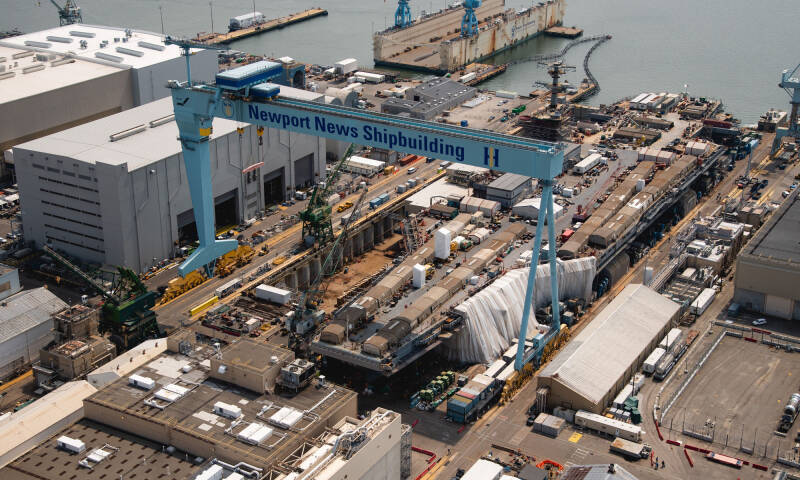
Newport News Shipbuilding, Newport News, VA